
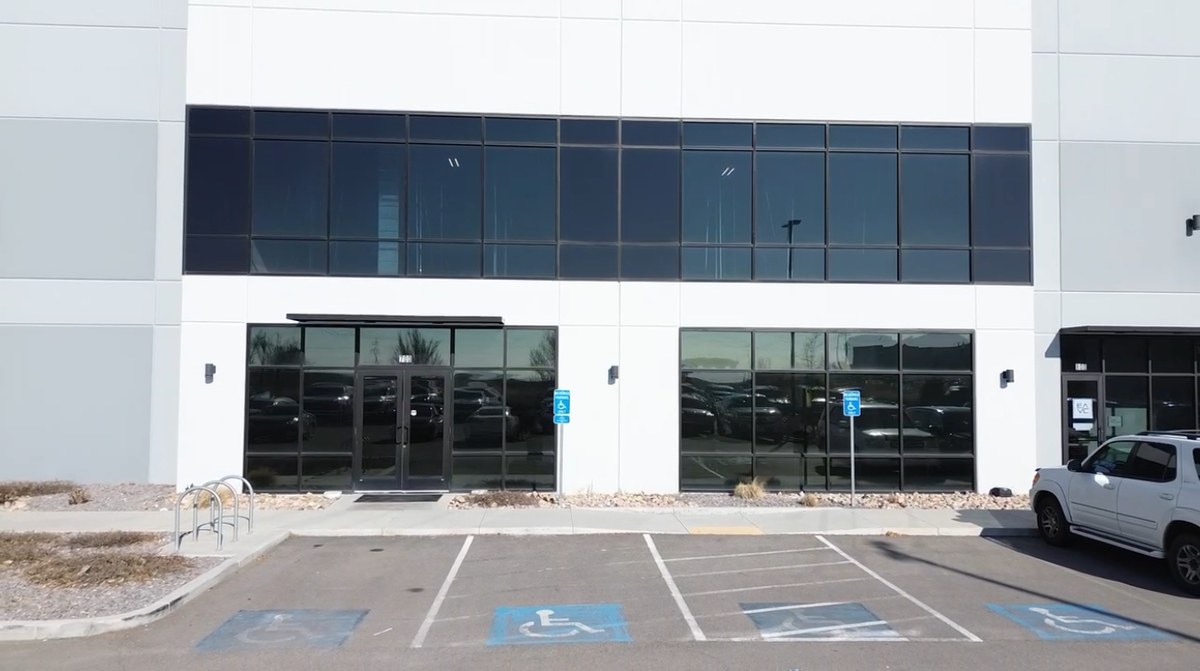
Security film
Security film holds shattered glass together so a broken pane doesn’t become a way in. Specified properly — the right film, the right thickness, the right attachment to the frame — it buys the minutes your alarm and your response actually need.
Security window film is an optically clear polyester laminate bonded to the interior face of existing glass.
It does not stop the glass breaking. It holds the broken fragments bonded together so the pane stays in the opening instead of clearing out of it, which turns a single swing into a repeated, loud, visible effort. Combined with an attachment system that ties the filmed glass to the frame, it keeps the whole assembly in place after impact.
It is installed on your existing glass. No windows are replaced, no frames are changed, and on a finished install you should not be able to tell it is there.
How it works
Untreated annealed glass breaks into shards and clears out of the opening; tempered glass dices into fragments and does the same. With security film bonded across the surface, the fragments stay stuck to the film and the pane holds together as a sheet. The intruder hits it, the glass breaks, and there is still a barrier in the way.
That barrier is not permanent. It is a delay — and delay is the entire product. An intruder who expected one swing and an open window is now making repeated loud attempts in full view, which is exactly the scenario most of them abandon.
The glass fractures. Nothing stops that — glass is glass, and no film makes it unbreakable.
The adhesive keeps the broken pieces bonded to the film, so the pane stays together instead of clearing the frame.
With attachment to the frame, the filmed sheet resists being pushed through as a unit. Without attachment, this is the step that fails.
Thickness options
Thickness is the main lever, and it maps to the threat you’re planning for rather than to a general idea of “more secure”. Heavier film resists tearing and penetration better — and the heavier you go, the more the attachment matters, because a stronger sheet transfers more force to the frame.
The entry level. Holds broken glass together so it doesn’t become flying or falling fragments.
The usual answer for smash-and-grab and opportunistic break-ins. Substantially harder to tear through than 4 mil.
The heaviest tier. Specified where a documented standard applies rather than where someone chose it.
Attachment
Here is the part that decides whether a security film installation actually works. Film bonds to the glass — but the glass itself only sits in the frame, held by a glazing bead or a glass stop. Under a hard enough impact, the whole filmed pane can come out of the frame in one piece.
The glass held together perfectly. It is now lying on the floor, and there is a person-sized hole where the window used to be.
Cross-section through the edge of a glazed opening. Cyan is the security film; hatched teal is the attachment; the red arrow is an impact from outside. In (1) nothing ties the pane to the frame. In (2) a silicone bead bonds the film to the frame. In (3) a mechanical attachment holds the filmed glass in the frame. On doors, the glass stop needs the mechanical system described under Z-Secure.
We specify DOWSIL 995 Silicone Structural Sealant — the industry standard for this application — run as a continuous bead of 0.75″–1.0″ around the perimeter, bridging the filmed glass to the frame. It comes in white, black and clear, so the bead either disappears against the frame or reads as a deliberate finished detail, whichever suits the opening.
Bead width is not a style choice. Film manufacturers publish the attachment detail their warranty depends on, and an undersized bead is one of the common reasons a filmed opening underperforms what the specification promised. We run the full width and name it on the quote.
Attachment is not an upsell. The recognized blast, windborne-debris and forced-entry ratings are achieved by the film and its attachment tested together as a system, so a film that earned a rating with attachment does not carry that rating without it.
| Film | What it’s for | Typical use | Attachment |
|---|---|---|---|
| 4 mil | Fragment retention and safety glazing | Accidental breakage, seismic, code-required safety glazing | Optional — add it where the glazing has to stay in the opening |
| 8 mil | Forced-entry deterrence | Storefronts, schools, offices, exposed residential glass | Recommended — without it the pane can leave the frame intact |
| 15 mil | High security and blast mitigation | Government, utilities, high-value stock, rated specifications | Required — the rating belongs to the tested assembly |
| Any thickness on a door |
Keeping the glass and the glass stop in the door | Entry doors, vestibules, schools and houses of worship | Mechanical — see Z-Secure; a bead alone does not hold a glass stop |
Before you buy
Most of what gets oversold in this category happens right here, so we would rather put it in writing before you spend anything.
Z-Secure for doors
A silicone bead on a window works because the glass sits in a deep, fixed frame. A door is different: the glass sits in a removable glass stop or kit, and the method most specifications call for does not hold that stop in place. Break the glass, push, and the filmed pane and its stop come out of the door together.
This is the single most common failure point in school and house-of-worship glazing, because the entry doors are exactly where it matters most and exactly where the standard approach is weakest.

A patented mechanical anchoring system built specifically for doors. Each unit is custom-made for the door’s size and style and finished to match the frame, so on a finished install it reads as part of the door rather than as added hardware.
How it attaches: the anchor grips the door frame, wraps over the glass stop, and presses onto the filmed glass. That keeps the glass and its stop in the door after the glass breaks, which a silicone bead on the film alone doesn’t do. Every anchor is made to measure for the door it goes on.
It works on glass, and on acrylic and Lexan glazing.
Full Z-Secure detail — mechanics, patents, testing and what we can put in a submittal →
Shade N Shield is the authorized Z-Secure dealer in Utah. If your doors need this system, we are the installer in the state who can specify and fit it.
Schools, churches, childcare, clinics and any building where the entry doors are glazed and the people inside cannot leave quickly. If you have had a security assessment that recommended film, ask whoever wrote it what happens to the door glass — it is the question that separates a real specification from a quote.
Utah specifically
Most security film is bought after a break-in or an attempt. In Utah there is a second reason. A USGS and Utah Geological Survey assessment puts the chance of one or more magnitude 6.75 or larger earthquakes along the Wasatch Front at 43 percent over 50 years. In a quake, the glass in lobbies, corridors and entry vestibules can break and spread across the routes people use to get out. Security film does not keep a building standing. It keeps broken glass in one piece and attached to itself. This matters most in schools, clinics and offices with a lot of glass. Where a pane must stay in its frame, like a door or sidelight, the film needs an attachment method. On doors, that means Z-Secure rather than a silicone bead.
The ratings
These are not interchangeable grades of “how secure”. They are separate tests for separate threats, and a film can meet one and have nothing to say about another. If a bid names a rating, it should also name the test.
| Standard | Threat | What the test does |
|---|---|---|
| ANSI Z97.1 CPSC 16 CFR 1201 |
Human impact | A person walking into the glazing. Measures whether it survives a defined impact without producing dangerous fragments. This is the safety-glazing requirement for doors, sidelights and low panels — a code matter, not an optional upgrade. |
| ASTM F1642 with GSA TS01 hazard ratings |
Blast | Glazing under a defined blast load, in a shock tube or arena test. Scored by how far fragments travel into the room — the hazard rating describes where the glass ends up, not whether it broke. |
| ASTM E1886 ASTM E1996 |
Windborne debris | A defined missile fired at the glazing, followed by thousands of pressure cycles. The hurricane standards; relevant in Utah mainly where a specification imports them for impact resistance. |
| EN 356 | Manual attack | Graded P1A to P8B. The lower grades drop a steel ball from increasing heights; the upper grades are repeated axe blows, counted. The closest thing to a forced-entry rating. |
| EN 12600 | Pendulum impact | The European classification for impact performance and breakage mode. |
Documentation
Every security quote we write names the film, the thickness, the attachment method and the standard the assembly was tested to — with the manufacturer’s spec sheet and test data attached. Ask and we will send the documentation before you commit to anything.
CSI-format section for the anchoring system, manufacturer spec sheets, test reports and warranty documentation for the film.
A written scope naming the film, the thickness, the attachment method and the standard the assembly was tested to. Not “security film” as a line item.
The product specification and test documentation, packaged so it can go straight into a review file.
Where it goes
Entry doors, vestibule glazing and ground-floor classroom windows. The door glass is the point — it is the fastest way through a locked building and the place a bead-only specification fails.
Large glazed entries, often with no staffed reception and a congregation that cannot move quickly. Usually paired with access control.
Storefronts, display glass and door glazing. The product here is noise and time — most of these attempts are abandoned when the first swing does not open the glass.
High-value controlled stock behind glass, usually with a compliance requirement attached to the physical security measures.
Where blast hazard ratings or a documented standard are specified rather than chosen, and the submittal package matters as much as the install.
Sidelights beside the front door, ground-floor sliders and basement windows — the three entry points that get used and the three nobody secures.
How we scope it
If you are comparing us against another bid, compare these line by line. A quote that says “install security film” and gives a price has not told you what you are buying.
What you are actually planning for — a smash-and-grab, a forced entry, fragment safety, a blast specification. These need different products.
Which glass, what it is made of, what frame it sits in, and whether it is a door or a window. Doors get specified separately.
Named manufacturer and product, the mil thickness, the attachment method for each opening, and the standard the assembly was tested to — with the spec sheet attached.
We also tell you where film is the wrong answer. Sometimes the honest recommendation is laminated glazing, a different door, or spending the money on access control instead. More security film questions answered →
Security film FAQs
No. Security film is not a ballistic product and must never be specified as one. Ballistic protection is a rated glazing system — laminated or polycarbonate glazing tested to a ballistic standard — not a film applied to existing glass. If a bid implies otherwise, that is the moment to stop reading it.
We don’t publish a time, and we’d be careful with anyone who does. Resistance depends on the film thickness, the glass behind it, whether an attachment system was used, and how determined and equipped the person is. What we give you instead is the manufacturer’s published test data for the exact film we’re quoting, with the test conditions stated.
Yes, and for fragment retention and safety glazing that is often the right specification. But understand what you are buying: the film holds the glass together, and nothing holds the glass in the frame. For forced-entry resistance that distinction is the whole thing.
A window’s glass sits in a deep fixed frame, so a structural silicone bead has something solid to bond to. A door’s glass sits in a removable glass stop, and a bead applied to the film face does not hold that stop in the door. Break the glass, push, and the filmed pane and its stop come out together. Doors need mechanical attachment — that is what Z-Secure is for.
Security film is optically clear, so on a finished install you should not be able to tell it is there from inside. Where you will see something is the attachment: a silicone bead is a visible line around the perimeter, available in white, black or clear, and a mechanical profile is a finished edge detail color-matched to the frame. We show you both before we start.
Often, but it is a specification question rather than a yes. Heavy security film changes how much solar energy the glass absorbs, and on a sealed dual-pane unit — particularly one with an existing Low-E coating — that raises thermal stress. We work to the manufacturer’s glass compatibility chart, and sometimes the answer is a different film or a different approach. More on glass compatibility.
Yes, and we prefer it. We can provide manufacturer spec sheets, test reports, warranty documentation, and for the anchoring system a CSI-format section (08 88 53) that drops into a submittal package. If a consultant has already written a scope, we will quote to it and tell you plainly if we think any part of it is wrong.
Related
Where we install it
Free on-site walkthrough. We name the film, the attachment and the standard — in writing.