
Residential window film for daytime privacy
Blinds shut all day because the street can see in, or a neighbor’s window faces yours. Daytime privacy film goes on the windows you already have. In daylight, people outside see a reflective finish or a less reflective charcoal tone, and you keep your view. Choose anywhere from moderate, semi-private film to maximum daytime privacy, and the room runs cooler too. Most homes are done in a day.
Daytime privacy film is a dual-reflective or dark neutral film (lower reflective charcoal tone) installed on the inside of the glass. A dual-reflective film has a reflective finish on its outside face and a less reflective inside face. Darker shades give a stronger reflective finish and lighter shades a softer sheen, so from the street the window shows the sky and the yard back to whoever is looking, while you look out through it. A dark neutral film does the same job with a less reflective charcoal tone: from outside, the room behind it reads as dark. The glass and its coating can still add some reflection in bright light.
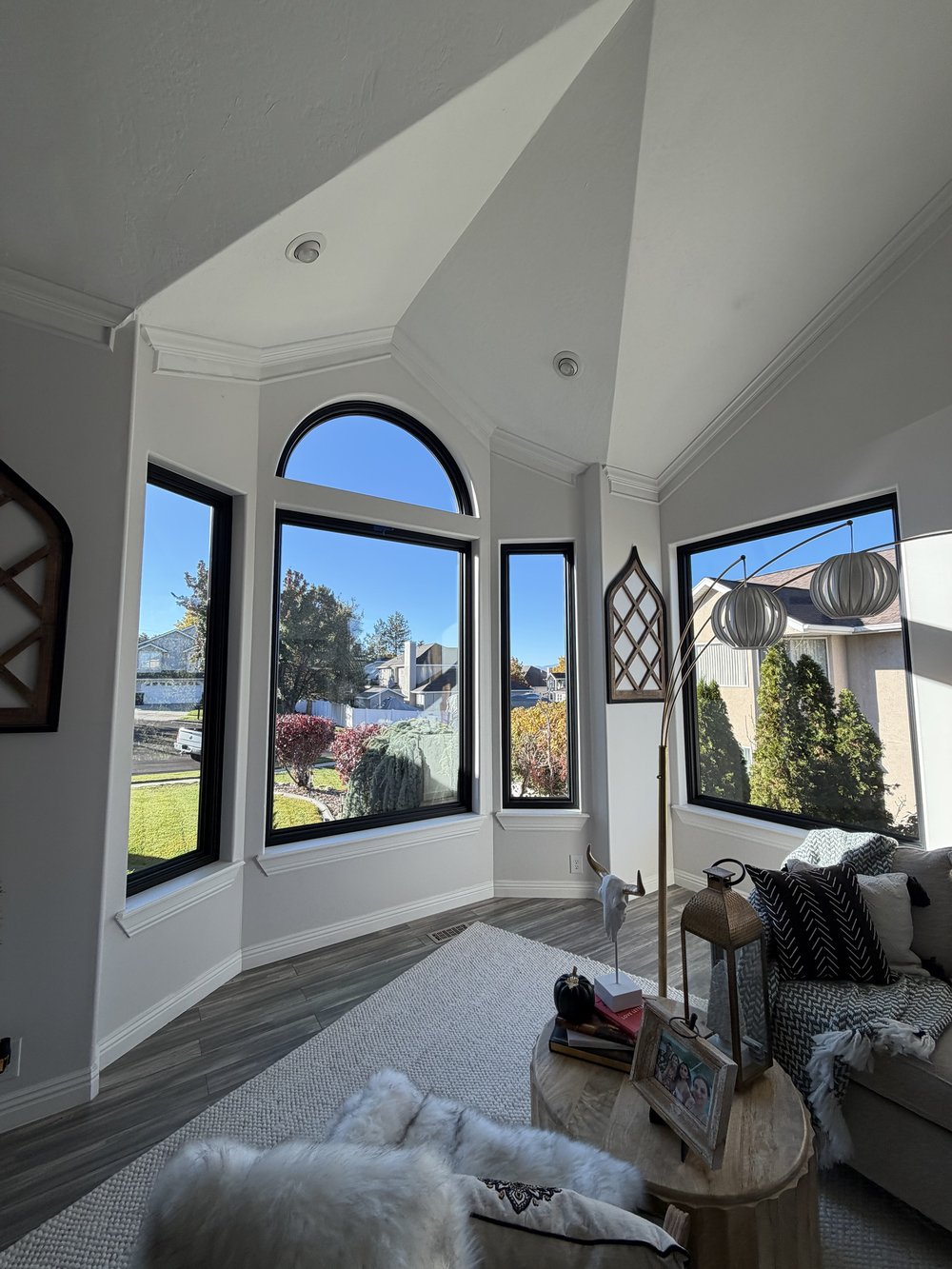
Both work on one rule: lighting. In daylight the outside is far brighter than your room, so people outside see the reflection or the dark tone, and you see the view. Both are solar films as well, so the film that gives you privacy also takes heat and glare out of the room.
Looking at this for an office, store or building instead? The commercial solar control page →
Who it suits
Nobody calls asking for “dual-reflective film.” They describe one of these.
A front room or home office on the street side, where the blinds stay shut all day so passers-by cannot look in. This film lets the blinds stay open and keeps people from looking in.
Two houses close together, window facing window. From their side your window will have a reflective or dark finish; from yours, the light and the view stay.
You bought the house for the mountain or valley view and spend the day with the blinds half closed. With daytime privacy film enjoy your full view and maintain privacy during the day.
Patio doors and back windows that look straight at the neighbor’s deck and into their home. Film gives the back of the house privacy during the day so you don’t have to keep your blinds shut 24/7.
Where it goes
Two looks
Within each look, shades run from moderate, semi-private to maximum daytime privacy. Lighter shades keep more light and give less privacy.
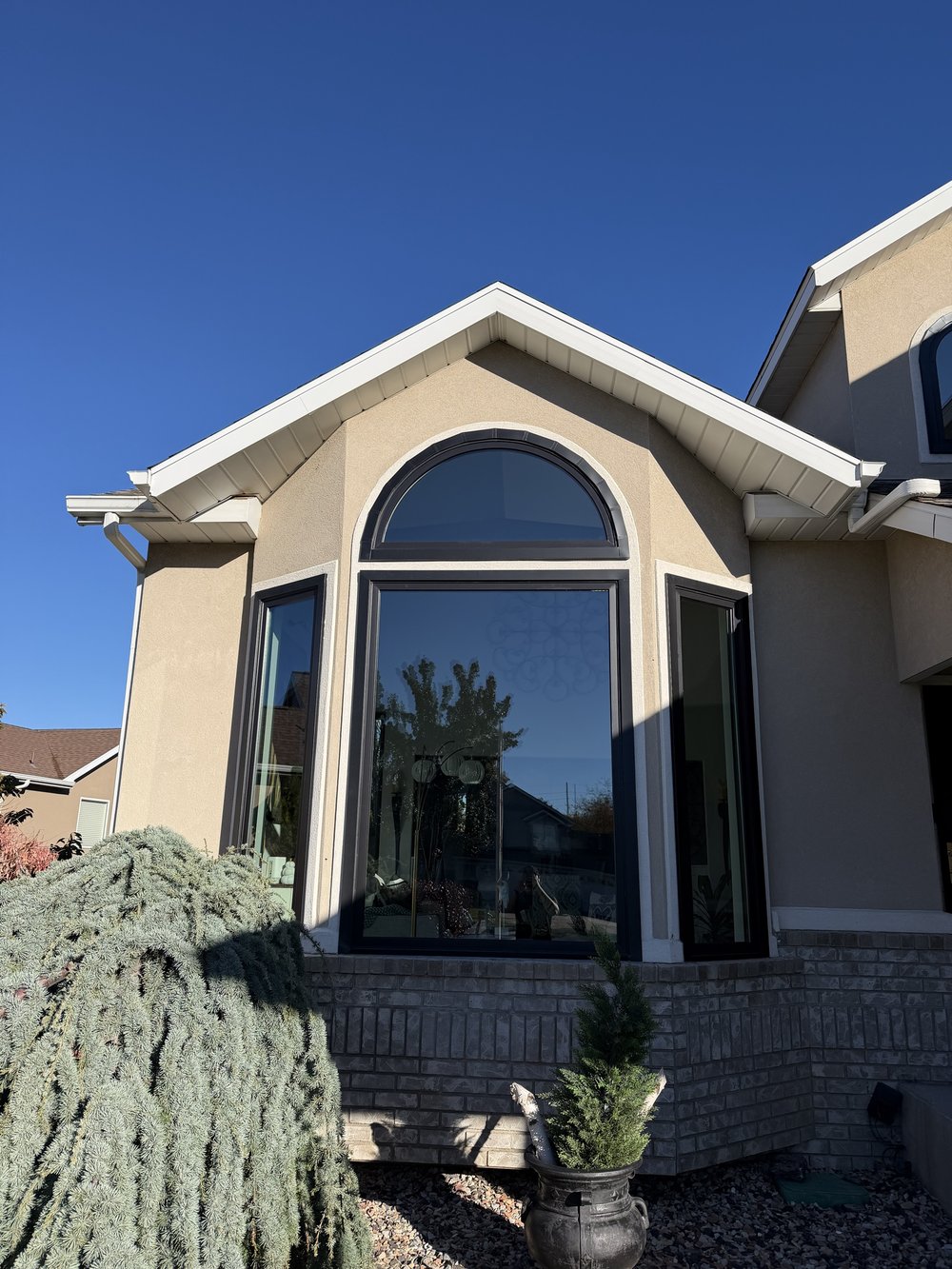
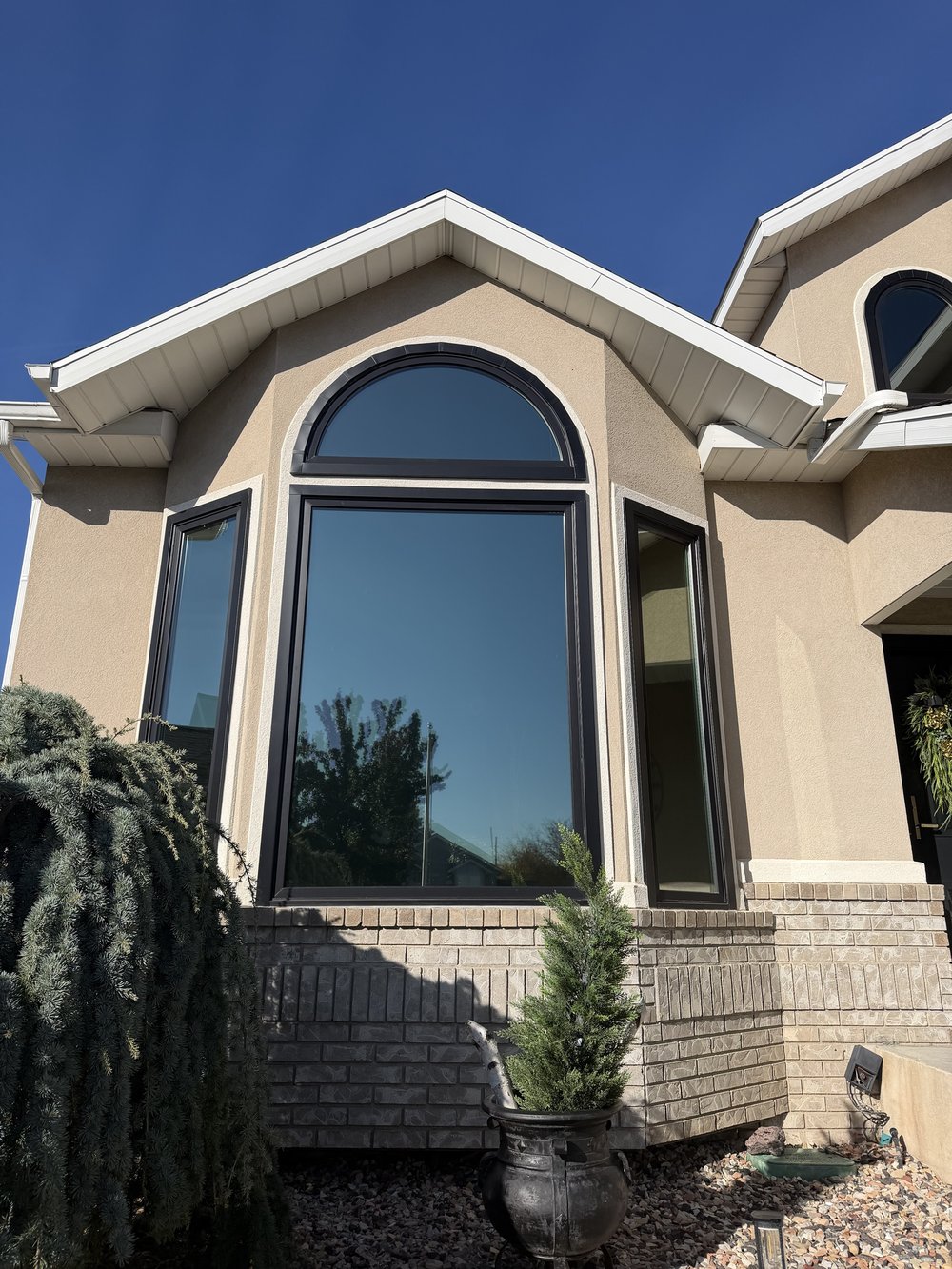
A reflective finish from outside in daylight, showing the sky and the yard. Daytime privacy with a less reflective inside face so the view out stays clear. It is the film in the Mapleton photos above.
A less reflective charcoal tone from the outside. Your glass type and its coating can still add some reflection in bright light. Some houses and some HOAs suit this better than a reflective finish.
From most privacy to least, seen from outside


Tap a photo to see it larger.
The night catch
This is the one thing to know before you buy daytime privacy film, and the reason we ask which rooms you mean.
Once your room is brighter than outside, the rule flips: the street sees in, and from inside the window shows your own room back. Blinds or curtains still matter after dark.
For bathrooms, bedrooms and anywhere privacy matters at night, frosted or textured film is private day and night. Day & night privacy film →
The effect depends on how much brighter outside is than inside. On a dark winter afternoon with the lights on, it is weaker; on a bright day it works best.
Because it is a solar film, the room runs cooler on sunny days and screens are easier to see. Heat, glare & fading film →
The visit
We look at the actual glass, ask which rooms bother you, and bring samples. About 30 minutes for most homes, and 45 to 60 minutes for larger properties.
Two or three options with the trade-offs stated. No pressure and no same-day-only pricing.
We lay down protection, detailed window cleaning, and clean up as we go. Most homes are one day. We ask that you clear the space around your windows beforehand.
Plan on about 30 days before cleaning the glass, which is typical manufacturer guidance. Haze or small water pockets can show for the first few weeks, and cooler or cloudier weather slows curing. We’ll give you the cure window for your film at install.
What it costs
Price depends on the number and size of your windows, access, the film you choose and whether old film needs to be removed. The estimate is free.
Daytime privacy film FAQs
Yes, once your lights are on and it is dark outside. Every daytime privacy film works this way. For privacy at night, choose frosted film for that window or close the blinds after dark.
It depends on the film and the shade. Lighter shades give moderate, semi-private screening in daylight. Darker shades give maximum daytime privacy. Privacy also depends on how much brighter it is outside than inside. We put samples on your windows so you can stand outside and see what the street sees before you choose.
With dual-reflective film, the windows that have it will, from outside in daylight. If you would rather not, a dark neutral film gives privacy with a less reflective charcoal tone instead. We put both on your windows before you choose.
Yes. During the day the view out is clear and a little darker. At night with the lights on, you see some reflection of the room on the window.
No. Frost blocks the view both ways, all the time, and keeps the light. Daytime privacy film keeps your view and gives one-way privacy only while it is brighter outside. Day & night privacy film →
No. It goes on the inside of the glass, where it is protected from weather and scratches.
Related
Where we install it
Free in-home estimate with daytime privacy samples on your own windows.